
If you’re searching for online trauma counseling in Ohio, you may already know something feels off—even if your life appears successful on the outside. You may have built a thriving career, earned advanced degrees, or become the person everyone depends on. Yet despite your accomplishments, you struggle with self-doubt, emotional exhaustion, or the feeling that your worth depends entirely on what you achieve. Online trauma counseling Ohio services can help uncover the hidden impact of childhood emotional neglect and provide compassionate, evidence-based support to help you heal.
From the outside, your life may look impressive. You manage deadlines, support your family, maintain friendships, and continue achieving new milestones. Friends may describe you as independent, dependable, and resilient.
Inside, however, you might feel very different.
You may constantly question yourself, struggle to ask for help, feel guilty when resting, or believe you have to earn love through performance. Even after reaching your goals, satisfaction may disappear quickly, replaced by the pressure to accomplish something else.
These experiences are more common than many people realize.
For countless adults throughout Columbus, Cleveland, Cincinnati, Toledo, Akron, Dayton, and communities across Ohio, these patterns can often be traced back to Childhood Emotional Neglect (CEN)—a form of developmental trauma that is often invisible but deeply impactful.
Unlike physical abuse or obvious traumatic events, childhood emotional neglect is defined by what didn’t happen.
Your emotional needs may have been ignored, minimized, or never acknowledged, teaching your nervous system that your feelings weren’t important.
The encouraging news is that healing is possible.
Key Takeaways
- Online trauma counseling in Ohio helps adults understand how childhood emotional neglect continues to affect relationships, careers, stress, and self-worth.
- Childhood emotional neglect is often invisible because it involves unmet emotional needs rather than obvious abuse.
- High achievement, perfectionism, people-pleasing, and hyper-independence can all develop as survival strategies.
- Trauma healing involves both understanding your experiences intellectually and helping your nervous system feel safe again.
- Online therapy makes trauma-informed care accessible throughout Ohio from the comfort and privacy of your home.
What Is Childhood Emotional Neglect?
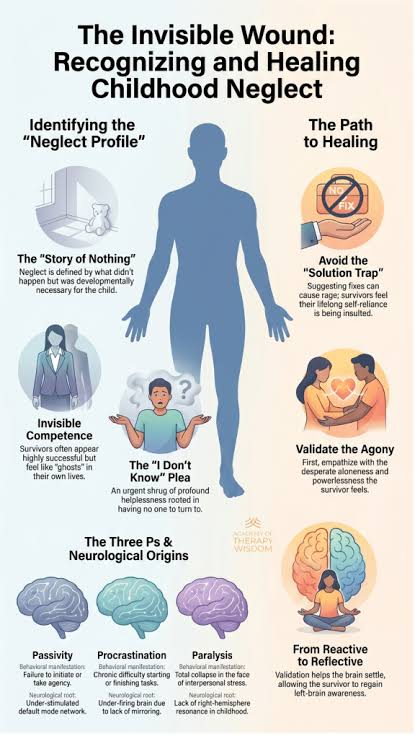
Childhood Emotional Neglect (CEN) occurs when caregivers consistently fail to notice, validate, respond to, or support a child’s emotional needs.
This doesn’t necessarily mean parents intended harm.
Many caregivers deeply love their children but may struggle with their own mental health, trauma history, stress, emotional regulation, or lack of understanding about emotional development.
A child may grow up with:
- Food
- Clothing
- Shelter
- Education
- Opportunities
Yet still experience emotional neglect because their inner world was rarely acknowledged.
Children naturally learn about themselves through their caregivers’ responses.
When emotions are ignored or dismissed, children often begin believing:
- My feelings don’t matter.
- I shouldn’t need help.
- I must handle everything alone.
- I shouldn’t burden other people.
- My value depends on what I accomplish.
These beliefs can quietly follow someone well into adulthood.
Why Childhood Emotional Neglect Is Often Missed
Unlike other forms of trauma, emotional neglect doesn’t always leave obvious memories.
Many adults say things like:
“Nothing bad happened.”
or
“My childhood was fine.”
Yet when asked about emotional support, they struggle to remember feeling comforted, understood, or emotionally safe.
That’s because emotional neglect is often about absence rather than action.
It is the absence of:
- Emotional validation
- Comfort
- Healthy boundaries
- Feeling understood
- Emotional safety
- Secure attachment
For many adults, recognizing emotional neglect is the first step toward understanding lifelong patterns that never quite made sense.
How Childhood Emotional Neglect Affects Adults
Children naturally adapt to survive.
The strategies that protected you as a child may continue operating decades later—even when they’re no longer helpful.
1. Hyper-Independence
You rarely ask for help.
Even when overwhelmed, you convince yourself you should handle everything alone.
Receiving support may actually feel uncomfortable or even shameful.
Many adults describe feeling anxious when depending on anyone else.
2. Perfectionism
Mistakes may feel far more threatening than they actually are.
Instead of viewing mistakes as opportunities to learn, you may interpret them as evidence that you’re not good enough.
Perfectionism often becomes an attempt to earn acceptance.
3. Workaholism
Success becomes more than an achievement.
It becomes your identity.
You may struggle to relax because slowing down creates anxiety or guilt.
Rest feels unproductive.
Productivity feels safe.
4. Difficulty Identifying Emotions
Some adults experience alexithymia, or difficulty recognizing and describing emotions.
Instead of noticing sadness, disappointment, or frustration early, emotions may build silently until they appear as:
- Burnout
- Irritability
- Panic attacks
- Physical exhaustion
- Emotional shutdown
5. Chronic People-Pleasing
You may automatically prioritize everyone else’s needs while ignoring your own.
Saying “no” feels selfish.
Setting boundaries creates guilt.
You may fear disappointing others even when your own well-being suffers.
6. Harsh Self-Criticism
Your inner voice may be far less compassionate than you would ever speak to someone else.
Instead of celebrating accomplishments, you quickly focus on what could have been better.
Self-worth becomes tied to performance rather than simply existing.
The Hidden Connection Between Childhood Emotional Neglect and Burnout
Many successful adults don’t realize their chronic stress isn’t only caused by work.
It’s also fueled by lifelong nervous system patterns.
When emotional needs are consistently ignored during childhood, the body often remains in a heightened state of vigilance.
Over time this may contribute to:
- Chronic fatigue
- Muscle tension
- Headaches
- Digestive issues
- Difficulty sleeping
- Anxiety
- Emotional exhaustion
Your body isn’t failing you.
It’s trying to protect you using strategies it learned years ago.
According to the Substance Abuse and Mental Health Services Administration (SAMHSA), trauma can have long-lasting effects on physical health, emotional regulation, and relationships.
Why Understanding Isn’t Always Enough
Many high-achieving adults have already read self-help books.
They understand psychology.
They know where their patterns come from.
Yet nothing changes.
Why?
Because trauma isn’t stored only as thoughts.
It is also stored within the nervous system.
Intellectual insight alone doesn’t always change automatic stress responses.
That’s why trauma-informed therapy focuses on both:
- Understanding your experiences
- Helping your body experience safety again
Healing happens when both the mind and nervous system begin working together.
How Online Trauma Counseling Ohio Helps You Heal
One of the greatest benefits of online trauma counseling Ohio services is that healing can happen from the comfort of your own home.
Virtual therapy provides access to licensed trauma therapists across Ohio while allowing you to remain in a familiar, comfortable environment.
Trauma-informed counseling may help you:
Reconnect With Your Emotions
Instead of automatically pushing feelings away, you’ll begin recognizing emotions before they become overwhelming.
Learning to identify emotions creates opportunities to respond rather than react.
Calm Your Nervous System
Your therapist may introduce evidence-based approaches such as:
- Grounding exercises
- Mindfulness
- Somatic awareness
- Breathwork
- Trauma-informed coping skills
These techniques help your nervous system gradually experience greater safety.
Build Self-Compassion
One of the most important parts of healing emotional neglect is learning to treat yourself with the same kindness you naturally offer others.
Self-compassion isn’t weakness.
It’s an essential part of recovery.
Learn Healthy Boundaries
Many adults recovering from emotional neglect struggle with saying no.
Therapy helps you develop boundaries that protect your emotional health without unnecessary guilt.
Healthy boundaries strengthen relationships rather than damage them.
Create Secure Relationships
As healing progresses, many people notice they become more comfortable:
- Asking for help
- Receiving support
- Expressing emotions
- Trusting safe people
- Building deeper connections
Why Many Ohio Residents Choose Online Trauma Counseling
Virtual therapy offers several practical benefits.
Greater Accessibility
Whether you live in Columbus, Cleveland, Cincinnati, Toledo, Akron, Dayton, or a rural Ohio community, online therapy makes specialized trauma care more accessible.
Privacy
Many people appreciate receiving therapy without sitting in waiting rooms or traveling across town.
Flexible Scheduling
Busy professionals, healthcare workers, parents, graduate students, and caregivers often find virtual appointments easier to fit into their schedules.
Comfort
Many clients feel more emotionally regulated while participating in therapy from home.
Feeling physically comfortable often supports emotional openness during sessions.
How to Prepare for Your First Online Trauma Counseling Session
Preparing your environment can help you get the most from therapy.
Before your appointment:
- Find a quiet, private room.
- Wear comfortable clothing.
- Use headphones if available.
- Keep water nearby.
- Silence phone notifications.
- Ensure you have a stable internet connection.
- Allow yourself a few quiet minutes after your session if possible.
Common Myths About Childhood Emotional Neglect
Myth: “Nothing bad happened to me.”
Trauma isn’t only about what happened.
It’s also about what was missing.
Emotional neglect can have lasting effects even when basic physical needs were met.
Myth: “I’m successful, so I must be fine.”
Success doesn’t erase emotional pain.
Many highly accomplished adults quietly struggle with anxiety, loneliness, perfectionism, and burnout.
Myth: “I should be over it by now.”
Healing isn’t about willpower.
Your nervous system may still be responding to patterns learned many years ago.
Myth: “Therapy means blaming my parents.”
Trauma-informed therapy isn’t about assigning blame.
It’s about understanding your experiences and creating healthier patterns moving forward.
Frequently Asked Questions About Online Trauma Counseling Ohio
Can childhood emotional neglect cause physical burnout?
Yes.
Living in a prolonged state of emotional stress may contribute to fatigue, muscle tension, headaches, digestive concerns, sleep difficulties, and chronic stress.
What if I don’t remember much about my childhood?
That’s very common.
Trauma therapy doesn’t require perfect memories.
Instead, therapy often focuses on the patterns showing up in your life today.
Is online trauma counseling as effective as in-person therapy?
Research suggests telehealth can be highly effective for many mental health concerns when provided by licensed clinicians using secure technology.
How long does trauma therapy take?
Healing looks different for everyone.
Some people notice improvements within several months, while others choose longer-term therapy depending on their goals and experiences.
Is online therapy confidential?
Yes.
Licensed therapists use HIPAA-compliant telehealth platforms designed to protect your privacy and confidentiality.
Begin Healing Through Online Trauma Counseling in Ohio
You don’t have to carry the weight of hyper-independence, perfectionism, or emotional exhaustion forever.
Healing doesn’t require becoming a different person.
It means learning that your worth has never depended on your productivity.
At The Empowering Space, we provide compassionate, trauma-informed online trauma counseling throughout Ohio, helping adults heal from childhood emotional neglect, anxiety, burnout, and unresolved trauma in a safe and supportive environment.
If you’re ready to begin your healing journey, we’re here to help.
Our team can help you find a therapist who understands trauma and supports your unique path toward healing.
Recommended Resources
For additional information about trauma, emotional health, and recovery, explore these trusted organizations:
- Substance Abuse and Mental Health Services Administration (SAMHSA): https://www.samhsa.gov
- American Psychological Association (APA): https://www.apa.org
- National Institute of Mental Health (NIMH): https://www.nimh.nih.gov