
Dystany Fontanez, MSW Intern
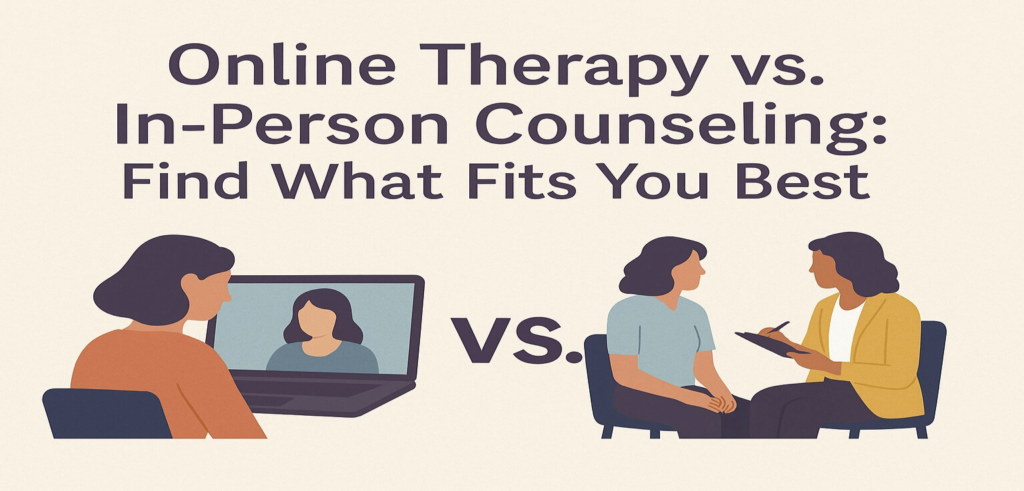
Compare online trauma therapy vs. in-person treatment. Research-backed effectiveness, cost comparison, and Texas/Ohio licensing guide. Find your best fit today.
Trauma can affect every part of life. It can impact your relationships, work, sleep, emotions, and sense of safety and worth. Trauma shows up differently for everyone; for some, it can look like anxiety or irritability, while for others it can cause them to be hypervigilant or emotionally numb.
If you are considering therapy to heal from trauma, one of the first questions you may ask is whether online trauma therapy or in-person therapy is a better choice for you.
This guide is here to help you make an informed and confident decision. We will compare online trauma therapy vs in-person treatment using research, clinical insight, and real-world considerations. We will also explore how trauma therapy works, what types of trauma each option may be best suited for, and how licensing laws affect clients in Texas (Dallas, Houston, Austin) and Ohio (Columbus, Cleveland, Cincinnati).
Most importantly, we will focus on what helps you feel supported and safe in your healing journey.
Understanding Trauma and Trauma Therapy
Trauma is not defined by a single event but by how an experience affects your sense of safety, your body’s stress response, your ability to cope, and your sense of grounding in daily life. Trauma can result from a wide range of experiences, including but not limited to abuse, neglect, violence, accidents, death, medical trauma, systemic oppression, and ongoing stress.
Trauma can affect people in many ways, including but not limited to increased anxiety, low mood, emotional numbness, feeling constantly on edge, difficulty trusting others, or feeling disconnected from yourself or the world around you. Trauma-informed therapy helps you understand that these responses are not personal failures; it is your mind and body developing survival strategies to protect you.
Trauma-informed individual therapy is designed to help people gently work through difficult experiences, manage strong emotions, and regain a sense of safety and control in their lives. A trained trauma therapist or licensed mental health professional will use evidence-based approaches that fit your needs and goals. Examples of these approaches are talk therapy, body-based techniques, and Eye Movement Desensitization and Reprocessing (EMDR) therapy, to support healing. Structured talk therapy helps you make sense of your experiences and identify unhelpful thought patterns. Body-based techniques focus on calming the nervous system, improving emotional regulation, and reconnecting you to physical sensations in a safe, grounded way. EMDR therapy can help your brain reprocess traumatic memories, so they feel less distressed.
Trauma therapy is not about “reliving” trauma. It is about learning to feel safe again, both internally and in the world around you. Trauma therapy moves at your pace. It prioritizes safety, collaboration, and empowerment at every step.
What Is Online Trauma Therapy?

Online trauma therapy, also called virtual trauma therapy or telehealth therapy, is trauma-focused counseling provided through secure video platforms, phone sessions, or text-based therapy. Clients attend therapy sessions from their own space rather than traveling to an office.
Online trauma therapy follows the same ethical standards and professional guidelines as in-person care. The treatment and care are delivered in a more accessible, affordable, and convenient way. Therapists licensed in Texas or Ohio can legally provide online therapy to clients located within those states.
What Is In-Person Trauma Therapy?

In-person trauma therapy, also known as traditional therapy, takes place in a physical office setting. Sessions occur weekly or biweekly, with the client and therapist in the same room. Some people feel reassured by the routine and face-to-face connection of in-person therapy, while others may find it inaccessible due to transportation, scheduling, or physical limitations. In-person therapy may be preferred by clients who:
- Feel safer with physical presence
- Have limited privacy at home
- Prefer face-to-face interaction
Both online and in-person trauma therapy can be effective when delivered by a trained mental health professional.
Online Trauma Therapy vs In-Person: Effectiveness
One of the most common questions people ask when starting their therapy journey is whether online trauma therapy is as effective as in-person therapy. This is an important question because you want to know that the form of therapy you choose, whether that is online or in-person, is worth your time, money, and will support your therapeutic journey.
Research shows that virtual trauma therapy can be just as effective as in-person treatment. Studies comparing online trauma therapy and in-person therapy indicate that outcomes for anxiety, post-traumatic stress disorder (PTSD) symptoms, and depression are comparable between online and in-person therapy.
For trauma survivors, feeling safe enough to engage in therapy is essential. Many clients report feeling more comfortable in their own home, which can strengthen the therapeutic relationship.
For many trauma survivors, safety is the foundation of healing. When clients feel physically and emotionally safe enough, they can engage in therapy and be open and vulnerable. Some clients report that attending sessions from their own home helps them feel more grounded and in control. Being in a familiar environment can reduce anxiety, increase openness, and strengthen therapeutic relationships.
However, effectiveness is not one-size-fits-all. Some individuals feel more supported by in-person therapy, especially those who have difficulty managing intense emotions or do not have a private space at home for online sessions.
The most effective format is the one that allows you to feel emotionally safe and supported.
Accessibility and Convenience
Accessibility is a major factor when deciding between online and in-person trauma therapy. Healing requires consistency. If attending therapy regularly feels stressful or complicated, it can unintentionally become a barrier to progress.
Online trauma therapy removes many of those obstacles. It offers:
- No commute or travel time
- Greater scheduling flexibility
- Easier access to rural or underserved areas.
For clients living in large states like Texas, driving between cities such as Dallas, Houston, and Austin can involve long distances and unpredictable traffic. Commuting times can add stress to an already full day. Virtual therapy eliminates that burden by allowing you to attend sessions from your home without traveling.
Similarly, in Ohio, clients in Columbus, Cleveland, or Cincinnati may find that providers have waitlists. Online therapy can expand options by connecting clients with licensed professionals across the state rather than limiting care to a single city. Expansion of access can decrease wait times and increase the chance of finding a therapist who specializes in trauma-specific modalities.
In-person therapy, while valuable, can be less accessible for individuals managing physical limitations, chronic illness, caregiving responsibilities, or demanding work schedules.
Cost Considerations: Online vs In-Person Trauma Therapy
Cost can influence access to care and long-term engagement in therapy. Healing is an investment, emotionally, and financially. When therapy feels financially manageable, clients are more likely to remain consistent, which is key to long-term engagement.
Online trauma therapy may reduce costs by:
- Eliminate transportation expenses.
- Reduce the need to take time off from work.
- Offer greater flexibility in scheduling.
- Allow alternative session formats.
While pricing ultimately depends on the provider and their practice model, online therapy can sometimes broaden options.
Insurance coverage is another key factor. Many insurance plans now reimburse online individual therapy at the same rate as in-person sessions. It is always recommended to verify your benefits directly with your insurance company to understand coverage details, copays, deductibles, and any session limits.
Therapy works best when you feel safe, connected, and able to attend consistently without added financial stress. Finding a balance between affordability and quality of care helps ensure that your healing journey remains consistent.
Privacy and Emotional Safety
Privacy is a critical concern in trauma therapy. When you are vulnerable and disclosing personal information, experiences, and memories, it is vital to have a private, secure space.
Some clients feel safer attending online sessions from home, where they control their environment. They can choose a familiar room, wrap up in a blanket, sit with a comforting object, and set the room temperature just how they like it. Being in a familiar environment can help reduce anxiety and make it easier to share your feelings. For individuals who feel uneasy entering new spaces, virtual therapy may feel less intimidating. Other individuals may worry about confidentiality when living with family, roommates, or partners.
However, being at home does not guarantee privacy for everyone. Clients who live with family, roommates, or partners may worry that the content of their therapy sessions will be overheard. Some clients may use headphones, sit in their cars, or sit in the bathroom with the shower running to ensure their confidentiality remains intact.
In-person therapy guarantees privacy, doors are closed, and sound machines are used. These offices are designed to ensure clients have confidentiality. For some individuals, having a dedicated therapy setting allows them to speak freely.
When considering online trauma therapy vs in-person, ask yourself:
- Do I have a private space for virtual sessions?
- Does traveling to an office increase or decrease my stress?
- Where do I feel the most emotionally safe?
Whether you pick online therapy or in-person therapy, pick the format that supports your sense of security, protects your confidentiality, and allows you to engage fully in the healing process. Pick the space where your story can be shared with trust and care.
The Tools and Techniques Used in Trauma Therapy
Cognitive Processing Therapy (CPT) –
Type of cognitive behavioral therapy that has been effective in treating PTSD. Mental health professionals will meet for approximately 12 sessions and help patients learn how to challenge and modify unhelpful beliefs related to the trauma.
Preferred Format: Effective for both online and in-person therapy
Trauma-Focused Cognitive Behavior Therapy (TF-CBT)
Trauma-focused cognitive behavior therapy is effective for children and adolescents who have experienced abuse, PTSD symptoms, anxiety, or depression. TF-CBT begins with the child or adolescent and caregiver, starting with separate sessions and progressing to joint sessions with the goal of developing healthy coping skills, building trust between caregiver and child or adolescent, changing negative thoughts, and easing emotional distress.
Preferred Format: Effective for both online and in-person therapy.
Eye Movement Desensitization and Reprocessing (EMDR) Therapy
EMDR therapy is a widely used trauma treatment. Mental health professionals and clients typically meet one to two times per week for 6 to 12 sessions. EDMR focuses on altering how the memory is stored in the brain so that the becomes less distressing, aiming to reduce and prevent recurring symptoms.
EMDR can be successfully adapted for virtual trauma therapy using visual, auditory, or tactile bilateral stimulation tools. Although online EMDR requires additional preparation, safety planning, and therapist training, research shows it is highly effective.
A qualified trauma therapist can help determine which format is most appropriate based on your needs.
Preferred Format: Effective for both online and in-person therapy
Prolonged Exposure (PE)
Prolonged exposure (PE) is an effective treatment used for PTSD; it usually takes about 8 to 15 sessions. PE therapy helps individuals slowly face trauma-related thoughts, memories, and situations.PE therapy aims to reduce PTSD symptoms.
Preferred Format: Effective for both online and in-person therapy.
Somatic Therapy
Somatic therapy, also referred to as body-based therapies, is a treatment that focuses on how our body responds to trauma. Somatic therapy uses movement exercises, breathwork, and body awareness to release tension and stress, build resilience and coping skills, emotional regulation, and promote self-awareness.
Preferred Format: Effective for both online and in-person therapy.
How Do Therapists or Mental Health Professionals Choose the Right Approach?
Therapists or mental health professionals tend to use more than one approach in treatment. They will consider several questions to choose the right approach:
- What is the presenting problem or problem(s)?
- Are there any safety concerns that need to be addressed?
- Are there any approaches that research supports are effective in treating presenting problem or problem(s)?
- Is the client open and ready to engage in treatment?
- What are the client’s needs and goals?
- How do we meet or achieve these needs and goals?
- Does the treatment plan align with the client’s background, beliefs, and values?
- Does the client agree with and understand the treatment plan, or do they have any concerns or questions?
Licensing Considerations in Texas and Ohio
Therapists must be licensed in the state where the client is physically located at the time of the session.
For clients in Texas (Dallas, Houston, Austin), therapists must be licensed in Texas.
For clients in Ohio (Columbus, Cleveland, Cincinnati), therapists must be licensed in Ohio.
It is important to remember that online therapy does not mean “any therapist anywhere,” but rather greater accessibility to licensed providers within your state.
Choosing the Right Trauma Therapist
Whether you choose online or in-person therapy, finding the right trauma therapist is essential.
Look for a mental health professional who:
- Has trauma-specific training
- Respects your pace and boundaries
- Practices inclusivity and cultural humility
- Makes you feel heard and supported
You deserve care that supports your goals. You should feel comfortable enough to be honest and open over time. If something doesn’t feel right, it’s okay to try a different therapist.
Who Might Benefit Most from Online Trauma Therapy?
You might benefit from online trauma therapy if you:
- Prefer flexibility and convenience
- Feel safer opening up from home
- Live in an area with limited trauma providers
- Want consistent access during life changes
Who Might Prefer In-Person Therapy?
In-person therapy may feel better if you:
- Prefer face-to-face connection
- Have limited privacy at home
- Feel grounded by a physical office space
There Is Not “One Right Choice”
Choosing between online trauma therapy vs in-person treatment is a personal decision. Both formats are effective and can support deep healing when provided by a skilled therapist.
What matters most is not the format, but whether you feel safe, heard, and supported. Trauma recovery is not linear, and the best therapy option is the one that meets you where you are.
At The Empowering Space, we believe therapy should be accessible, affirming, and centered around your needs.
If you are considering online trauma therapy or would like help deciding what option is right for you, The Empowering Space team is here to support you.
Reach out today to ask questions, learn more about our services, or book your first therapy session. Our team would be honored to support you on your path toward growth and healing. Healing is possible, and you do not have to do it alone.
Contact Us At: The Empowering Space PLLC

Call: (214)775-0857
Call: (469)445-2101
Email: info@theempoweringspace.com
References
American Psychological Association. (2017). Cognitive Processing Therapy (CPT). American Psychological Association. https://www.apa.org/ptsd-guideline/treatments/cognitive-processing-therapy
American Psychological Association. (2017b). Eye Movement Desensitization and Reprocessing (EMDR) Therapy. American Psychological Association. https://www.apa.org/ptsd-guideline/treatments/eye-movement-reprocessing
Bulkes, N. Z., Davis, K., Kay, B., & Riemann, B. C. (2022). Comparing efficacy of telehealth to in-person mental health care in intensive-treatment-seeking adults. Journal of psychiatric research, 145, 347–352. https://doi.org/10.1016/j.jpsychires.2021.11.003
Salamon, M. (2023, July 7). What is somatic therapy?. Harvard Health. https://www.health.harvard.edu/blog/what-is-somatic-therapy-202307072951
Scott, A. M., Bakhit, M., Greenwood, H., Cardona, M., Clark, J., Krzyzaniak, N., Peiris, R., & Glasziou, P. (2022). Real-Time Telehealth Versus Face-to-Face Management for Patients With PTSD in Primary Care: A Systematic Review and Meta-Analysis. The Journal of clinical psychiatry, 83(4), 21r14143. https://doi.org/10.4088/JCP.21r14143
Somatic therapy: Signs your body is releasing trauma | integris health. Somatic Therapy: Signs Your Body Is Releasing Trauma. (2024, October 28). https://integrishealth.org/resources/on-your-health/2024/october/somatic-therapy-signs-your-body-is-releasing-trauma
Strelchuk, D., Turner, K., Smith, S., Bisson, J., Wiles, N., & Zammit, S. (2023). Provision of online eye movement and desensitisation therapy (EMDR) for people with post- traumatic stress disorder (PTSD): a multi-method service evaluation. European journal of psychotraumatology, 14(2), 2281182. https://doi.org/10.1080/20008066.2023.2281182
Va.gov: Veterans Affairs. Prolonged Exposure (PE) for PTSD. (2018, August 10). https://www.ptsd.va.gov/understand_tx/prolonged_exposure.asp