
If you’re searching for virtual EMDR therapy in Texas, you may be wondering whether online trauma therapy is truly as effective as meeting with a therapist in person. The answer is yes. Research continues to show that virtual EMDR therapy Texas providers can safely and effectively help individuals process trauma, PTSD, anxiety, and other distressing life experiences from the comfort and privacy of home. Whether you live in Dallas, Houston, Austin, San Antonio, Fort Worth, El Paso, or a rural Texas community, virtual EMDR makes evidence-based trauma therapy more accessible than ever.
Trauma doesn’t always stay in the past. Even after a painful experience is over, your brain and body may continue responding as though the danger is still happening. You may find yourself avoiding certain situations, struggling with anxiety, feeling emotionally numb, experiencing panic attacks, or becoming overwhelmed by memories you wish you could leave behind.
The good news is that healing is possible.
Eye Movement Desensitization and Reprocessing (EMDR) is one of the most researched trauma therapies available today. Thanks to secure telehealth technology, licensed therapists can now provide the same evidence-based treatment online, helping clients throughout Texas begin healing without the stress of commuting to an office.
Key Takeaways
- Virtual EMDR therapy in Texas is research-supported and can be just as effective as in-person EMDR for many individuals.
- Online EMDR uses secure telehealth technology with visual, audio, or tapping-based bilateral stimulation.
- EMDR helps the brain reprocess traumatic memories so they become less emotionally overwhelming.
- Virtual sessions prioritize emotional safety through grounding exercises before trauma processing begins.
- Texans can access specialized trauma therapists from anywhere in the state without traveling.
What Is Virtual EMDR Therapy in Texas?
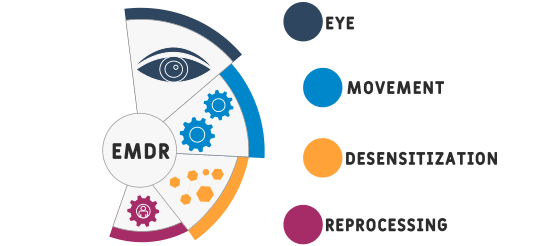
Eye Movement Desensitization and Reprocessing (EMDR) is an evidence-based psychotherapy developed to help people recover from trauma and other distressing life experiences.
Originally developed by psychologist Dr. Francine Shapiro, EMDR has become one of the most widely researched treatments for Post-Traumatic Stress Disorder (PTSD). Today, licensed therapists also use EMDR to help clients experiencing:
- PTSD
- Childhood trauma
- Anxiety disorders
- Panic attacks
- Medical trauma
- Grief and loss
- Relationship trauma
- Workplace trauma
- First responder trauma
- Military trauma
- Emotional abuse
- Sexual assault recovery
- Low self-esteem connected to past experiences
Unlike traditional talk therapy, EMDR doesn’t require spending every session discussing painful memories in detail. Instead, it helps your brain naturally process experiences that have become “stuck,” allowing those memories to lose their emotional intensity over time.
To learn more about the science behind EMDR, visit the EMDR International Association (EMDRIA): https://www.emdria.org.
How Trauma Affects the Brain
When something stressful happens, your brain usually processes the experience and stores it as a normal memory.
Trauma changes that process.
During overwhelming events, your brain shifts into survival mode—often referred to as fight, flight, freeze, or fawn. Instead of fully processing the event, the memory may remain “unfinished.”
Months or even years later, reminders of that experience can trigger intense reactions because your brain still believes you’re in danger.
This may look like:
- Panic attacks
- Flashbacks
- Nightmares
- Hypervigilance
- Difficulty sleeping
- Irritability
- Emotional numbness
- Difficulty trusting others
- Constant anxiety
Imagine your brain like a filing cabinet.
Most memories are neatly organized into folders. Traumatic memories, however, are like papers scattered across the floor. Every reminder causes your brain to trip over those unfinished files.
EMDR helps your brain finish organizing those memories so they become part of your past rather than continuing to affect your present.
The National Institute of Mental Health (NIMH) provides additional educational information about trauma, PTSD, and mental health at https://www.nimh.nih.gov.
How Does Virtual EMDR Therapy in Texas Work?
One of the biggest misconceptions about online EMDR is that something important is lost when therapy moves to a computer screen.
Fortunately, that’s not the case.
The therapy itself stays exactly the same.
The primary difference is how bilateral stimulation is delivered.
In an office, a therapist may move their fingers from side to side for you to follow with your eyes.
During virtual EMDR therapy in Texas, therapists instead use secure software that provides:
- Animated moving dots
- Light bars
- Alternating sounds
- Left-right tapping cues
- Visual bilateral stimulation
These tools create the same alternating stimulation necessary for your brain to begin reprocessing traumatic memories.
The Eight Phases of EMDR Therapy
EMDR follows a structured treatment model that emphasizes both safety and healing.
Phase 1: History Taking
Your therapist learns about your history, symptoms, goals, and identifies memories that may become treatment targets.
Phase 2: Preparation
Before processing trauma, you’ll learn coping skills including:
- Deep breathing
- Grounding exercises
- Safe place visualization
- Emotional regulation techniques
These skills help you stay emotionally balanced throughout treatment.
Phase 3: Assessment
You’ll identify:
- A target memory
- Negative beliefs connected to it
- Positive beliefs you’d like to strengthen
- Physical sensations connected to the experience
Phase 4: Desensitization
Using bilateral stimulation, your brain begins naturally processing the memory while your therapist guides the session.
Phase 5: Installation
Healthier beliefs begin replacing old negative beliefs.
For example:
“I am powerless.”
may gradually become
“I am safe.”
or
“I am capable.”
Phase 6: Body Scan
Your therapist checks whether any physical tension remains connected to the memory.
Phase 7: Closure
Every session ends by helping you return to a calm, grounded emotional state before logging off.
Phase 8: Reevaluation
At your next appointment, your therapist reviews your progress before continuing treatment.
What Happens During a Virtual EMDR Therapy Session?
A typical online session usually includes four stages.
1. Secure Login
You’ll connect using a HIPAA-compliant telehealth platform through your computer or laptop.
2. Grounding and Preparation
Your therapist begins by helping you feel calm and emotionally prepared through breathing exercises and grounding techniques.
3. Memory Processing
While briefly focusing on a specific memory, you’ll follow bilateral stimulation across your screen.
Between sets, your therapist may ask:
- “What came up?”
- “What are you noticing?”
- “Where do you feel that in your body?”
There are no right or wrong answers.
Your brain naturally processes information in its own way.
4. Closure
Your therapist always ensures you feel emotionally stable before ending the appointment.
Is Virtual EMDR Therapy Texas Really Effective?
One of the most common questions people ask is whether online EMDR actually works.
Research consistently says yes.
Studies continue to show that telehealth EMDR produces results comparable to in-person treatment for many individuals experiencing:
- PTSD
- Anxiety
- Panic disorders
- Childhood trauma
- Medical trauma
- Complex trauma
- Grief
- Chronic stress
Many people even prefer online therapy because they’re already in a familiar, comfortable environment where they can relax after emotionally demanding sessions.
Who Can Benefit from Virtual EMDR Therapy in Texas?
Virtual EMDR may benefit people experiencing:
- PTSD
- Childhood trauma
- Anxiety
- Panic attacks
- Burnout
- Divorce recovery
- Medical trauma
- Workplace stress
- Grief
- Military trauma
- First responder trauma
- Emotional abuse
- Physical abuse
- Sexual assault recovery
- Car accident trauma
- Performance anxiety
Every person’s story is unique.
A licensed therapist can determine whether EMDR is the most appropriate treatment for your individual needs.
Benefits of Virtual EMDR Therapy Texas
No Commute
Instead of driving across Dallas, Houston, Austin, or San Antonio after an emotionally demanding session, you can simply close your laptop and remain in your own space.
Greater Privacy
Virtual therapy allows you to attend appointments without worrying about crowded waiting rooms or running into someone you know.
Access to Specialists
You’re no longer limited to therapists within driving distance.
Virtual therapy allows you to work with licensed trauma specialists across Texas.
Flexible Scheduling
Busy professionals, parents, caregivers, and college students often find online appointments much easier to fit into their schedules.
Comfortable Healing Environment
Many clients report feeling more relaxed while participating in therapy from home.
How to Prepare for Your First Virtual EMDR Session
Preparing your environment can make your session more comfortable.
Before your appointment:
- Find a quiet, private room.
- Wear comfortable clothing.
- Use headphones if available.
- Keep water nearby.
- Turn off phone notifications.
- Ensure you have a reliable internet connection.
- Let family members know not to interrupt.
- Have tissues or a blanket nearby if that helps you feel comfortable.
Common Myths About Virtual EMDR Therapy
Myth: EMDR erases memories.
No.
You’ll still remember what happened.
The goal is to reduce the emotional distress connected to those memories—not erase them.
Myth: I’ll have to relive every traumatic event.
Not necessarily.
EMDR does not require repeatedly telling every detail of your trauma.
Myth: Online therapy isn’t as effective.
Research continues to support the effectiveness of virtual EMDR for many clients.
Myth: EMDR is only for PTSD.
EMDR is also commonly used for anxiety, panic disorders, grief, phobias, low self-esteem, and other trauma-related concerns.
Frequently Asked Questions About Virtual EMDR Therapy Texas
Do I need special equipment?
No.
You’ll simply need:
- A computer or laptop
- Webcam
- Stable internet connection
- Headphones or earbuds
Your therapist will provide access to any specialized EMDR software.
Is virtual EMDR safe?
Yes.
Licensed therapists use HIPAA-compliant telehealth platforms and teach grounding skills before beginning trauma processing.
How many sessions will I need?
Every person is different.
Some clients notice improvements within several sessions, while others benefit from longer-term treatment depending on their experiences and goals.
Can EMDR help anxiety?
Yes.
Many anxiety symptoms are connected to unresolved experiences. EMDR helps the brain process those experiences in healthier ways.
Does insurance cover virtual EMDR?
Insurance coverage depends on your provider and plan.
Your therapy office can help verify your benefits before treatment begins.
Start Virtual EMDR Therapy in Texas Today
Healing from trauma doesn’t mean forgetting what happened.
It means reaching a place where those memories no longer control your relationships, emotions, or daily life.
If you’re considering virtual EMDR therapy Texas, compassionate, evidence-based care is available.
At The Empowering Space, our licensed clinicians provide confidential virtual trauma therapy for individuals across Texas. Whether you’re experiencing PTSD, anxiety, panic attacks, or unresolved trauma, we’re here to help you move toward healing.
If you’re ready to take the next step:
Our team can help you find a therapist who fits your needs and answer any questions you have about starting virtual EMDR therapy.
Recommended Resources
To learn more about trauma recovery and EMDR, explore these trusted organizations:
- EMDR International Association (EMDRIA): https://www.emdria.org
- National Institute of Mental Health (NIMH): https://www.nimh.nih.gov
- American Psychological Association (APA): https://www.apa.org
- Substance Abuse and Mental Health Services Administration (SAMHSA): https://www.samhsa.gov