
(Signs You Need Addiction Therapy Plus How Virtual Treatment Works in Texas & Ohio)
If you’ve been wondering what are the signs you need addiction therapy, you’re not alone — and asking that question is already a meaningful step. Addiction therapy is a structured, evidence-based form of support that helps people understand and recover from substance abuse, compulsive behaviors, and the emotional patterns that fuel them. Many people don’t recognize the signs until things have already shifted from manageable to overwhelming. Whether you’re in Dallas, Houston, Austin, Columbus, Cleveland, or Cincinnati, this guide will help you identify the warning signs and understand how virtual addiction therapy can make recovery more accessible than ever.
Understanding Addiction Therapy and Why It Works
Addiction therapy goes beyond simply stopping a behavior — it focuses on what’s underneath it. Many people turn to substances or certain habits to cope with stress, trauma, anxiety, or emotional pain, and therapy works to gently unpack those layers.
Evidence-based treatment often includes approaches like cognitive behavioral therapy (CBT), motivational interviewing, and dialectical behavior therapy (DBT). These methods help you recognize patterns, shift unhelpful thinking, and build healthier coping strategies. Support groups may also be part of the process, offering connection and reassurance that you’re not alone.
At The Empowering Space, our individual therapy services are designed to address exactly these layers — pairing you with a licensed therapist who meets you where you are.
Why Recognizing the Signs of Addiction Matters
One of the biggest challenges people face is realizing when they need help. It’s common to minimize what’s happening or think, “It’s not that bad.” But you don’t have to wait for things to get worse to seek support.
Recognizing the signs you need addiction therapy early can make a meaningful difference in your recovery — addressing patterns before they deeply affect your health, relationships, or sense of self.
7 Signs You Need Addiction Therapy
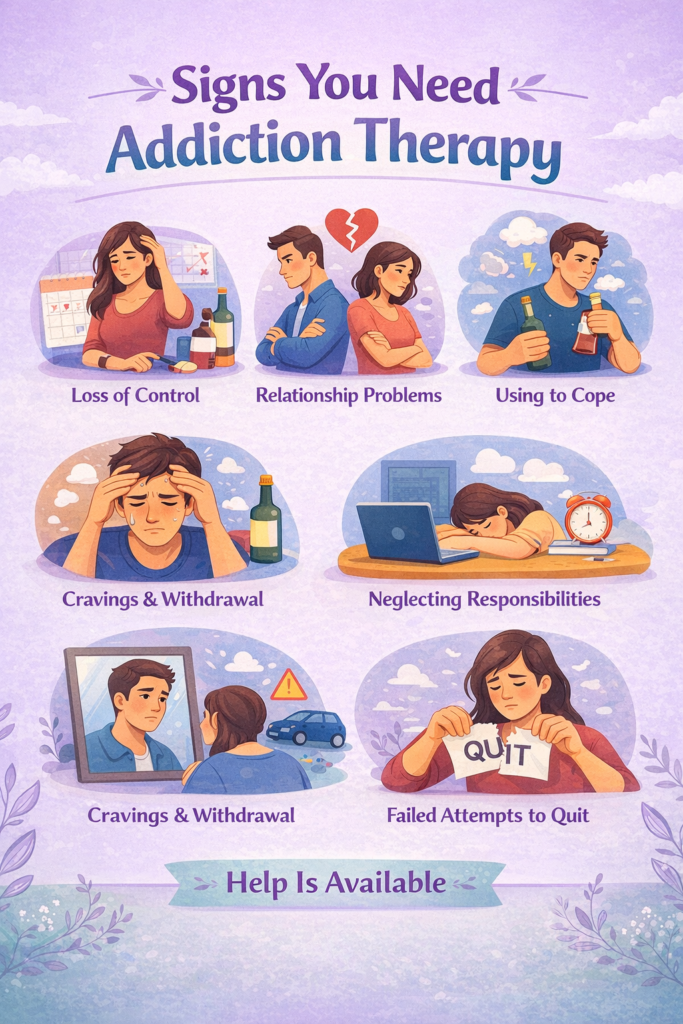
1. You Feel Like You’ve Lost Control Over Your Substance Use or Behavior
A key sign of addiction is feeling like your behavior is no longer fully within your control. You might set limits for yourself, only to find you regularly go beyond them. Even when you genuinely want to cut back, something pulls you back in. This loss of control can feel frustrating and confusing — and it’s one of the clearest indicators that addiction therapy could help.
2. Your Relationships Are Being Affected
Addiction often creates distance between you and the people you care about. You might notice more conflict, less communication, or a tendency to withdraw from loved ones. Sometimes trust becomes strained and interactions feel emotionally charged. Therapy helps you begin repairing these relationships while understanding your own needs more clearly. Our couples and family therapy can also support your loved ones through this process.
3. You Rely on Substances or Behaviors to Cope
If you find yourself turning to substances or certain behaviors whenever you feel stressed, anxious, overwhelmed, or even bored, this may signal a deeper reliance. While it may offer temporary relief, it often prevents you from developing healthy long-term coping strategies. Addiction therapy helps you build new ways of managing emotions that actually support your well-being.
4. You Experience Cravings or Withdrawal Symptoms
Cravings can feel intense and hard to ignore, and in some cases stopping can lead to physical or emotional withdrawal symptoms like irritability, restlessness, or trouble sleeping. These experiences can make it incredibly difficult to quit on your own. With professional support, you can learn how to safely navigate these challenges and reduce their impact over time. The Substance Abuse and Mental Health Services Administration (SAMHSA) offers additional resources if you need immediate support.
5. Your Daily Life and Responsibilities Are Being Disrupted
Over time, addiction can begin to interfere with your work, school, or family commitments. Tasks that once felt manageable may now feel overwhelming, and your routine may shift in ways that don’t align with your goals or values. This disruption is a strong signal that addiction treatment support is needed.
6. You Continue Despite Knowing the Negative Consequences
Even when you’re aware of the harm something is causing — whether emotional, physical, or relational — you may find yourself continuing the behavior. This is one of the most telling signs that addiction therapy is needed. Addiction isn’t about a lack of willpower; it’s about patterns that have become deeply ingrained and require professional care to change.
7. You’ve Tried to Stop or Cut Back but Can’t
If you’ve made attempts to quit and found it difficult to maintain, you’re not alone. Many people go through this cycle before seeking help. Needing support doesn’t mean you’ve failed — it means you’re ready for a different approach. Addiction recovery often becomes more sustainable with the guidance of therapy.
The Role of Mental Health in Addiction Therapy

Addiction and mental health are often closely connected. Conditions such as anxiety, depression, or borderline personality disorder can increase vulnerability to substance abuse. In many cases, addiction develops as a way to cope with emotional pain or instability.
This is why integrated care matters so much. Addressing both mental health and addiction together leads to stronger, more lasting outcomes. The American Psychological Association notes that co-occurring conditions are common and respond well to combined treatment approaches.
At The Empowering Space, our trauma-informed therapy and specialties are designed to treat the whole person — not just the surface-level behavior.
What Is Virtual Addiction Therapy?
Virtual addiction therapy allows you to receive professional support from the comfort of your own space. Through secure video sessions, you can connect with a licensed therapist without needing to travel to an office. This approach has made addiction treatment in Texas and Ohio significantly more accessible for people who may otherwise face barriers to care.
How Virtual Addiction Therapy Works
The process typically begins with an initial assessment where your therapist gets to know your history, current challenges, and goals. From there, a personalized treatment plan is created to support your specific needs.
You’ll meet regularly for one-on-one sessions, exploring triggers, building coping skills, and working toward meaningful change. Many programs also offer virtual support groups, giving you connection with others who understand your experience.
Benefits of Virtual Addiction Therapy
One of the biggest advantages of virtual addiction therapy is accessibility. Whether you’re in Dallas, Houston, Austin, Columbus, Cleveland, or Cincinnati, you can access care without the stress of commuting. It also offers flexibility, making it easier to fit sessions into your schedule — and many people find that being in a familiar environment makes opening up feel easier.
Learn more about how we work by visiting our FAQ page or exploring our pricing and insurance options.
Addiction Treatment in Texas & Ohio
Access to addiction treatment in Texas and Ohio has grown significantly with the rise of virtual services. Individuals in these states can now connect with professionals who understand their local communities and can provide culturally responsive, inclusive care.
Our therapist Yanitza Rice, LMSW, LCDC specializes in substance abuse and trauma-informed care — bringing compassionate, personalized support to every session.
Whether you’re navigating substance abuse or behavioral challenges, treatment options are designed to meet you where you are and support your unique journey toward addiction recovery.
Breaking the Stigma Around Addiction Therapy

Stigma can make it harder to reach out for help. Many people worry about being judged or misunderstood, which can delay the decision to seek support. It’s important to remember that addiction is not a personal failure — it’s a complex condition that deserves compassion and care.
The National Institute on Drug Abuse confirms that addiction is a chronic but treatable condition, and that seeking help is a sign of strength — not weakness.
Choosing to begin addiction therapy is a powerful step toward change and healing.
What to Expect in Your First Addiction Therapy Session
Starting therapy can feel like a big step, but your first session is simply a conversation. It’s a space where you can share your experiences, ask questions, and begin building a connection with your therapist. There is no pressure to have everything figured out — just showing up is enough.
Ready to take that step? Meet our therapists to find the right fit for you.
Start Your Addiction Recovery Journey Today
Recognizing the signs you need addiction therapy can open the door to meaningful change. Whether you’re facing substance abuse, emotional struggles, or patterns that feel hard to break, support is available.
With virtual addiction therapy, getting help is more accessible than ever — especially for those seeking addiction treatment in Texas and Ohio. With the right tools and support, recovery is not only possible, but sustainable.
Ready to take the next step? The Empowering Space is here to support you with compassionate, virtual addiction therapy tailored to your needs. Book your first session today or contact us with any questions — we’re here to walk alongside you every step of the way.